
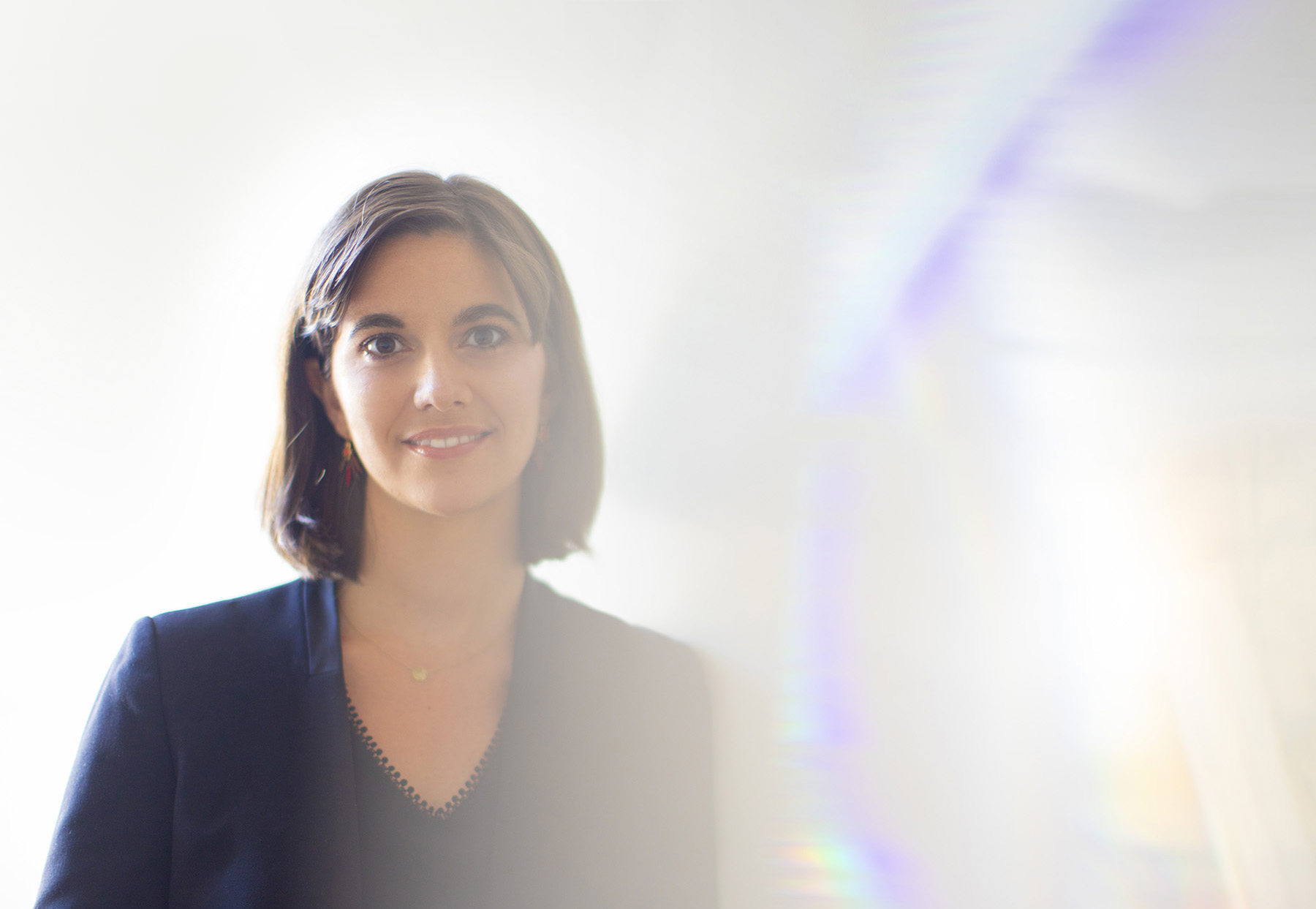
On April 7th, our fourth subscription concert at the Stadtcasino Basel will present "Ligeti in Africa," featuring works by Lukas and György Ligeti and Hanna Kendall. The concert, where African pop meets contemporary European orchestral music, will be conducted by Chloé Dufresne.
We are very much looking forward to this collaboration!
With her precise technique, thoughtful direction, and broad palette of colors, Chloé Dufresne has made a name for herself as a conductor. Just three years after graduating from the Sibelius Academy in Helsinki, she can already look back on prestigious awards and engagements. As a comprehensively trained musician who also studied viola, voice, and choral conducting, she possesses a wide range of skills. In addition to the core symphonic repertoire, she also dedicates herself to contemporary music and music theater.
To get to know her and her interest in contemporary music better, we asked her a few questions:
1. How did you first come into contact with "classical music" and why have you been unable to let go of it?
I don't remember my very first contact with music exactly, but it was with the piano when I was about five years old. After that, I started taking piano lessons. But my true love began when I was eight: I started playing the viola at the conservatory and singing in the children's choir of the Montpellier Opera. I sang at the opera for twelve years! The world of opera and the stage are the reason I fell in love with music; the voice is the most immediate instrument we have, the phrasing and the vibration are so natural! I was fascinated by the conductors and making music together with other people.
2. You studied not only conducting, but also choral conducting, singing, and viola. Given this broad background: Why your particular interest in contemporary music?
Contemporary music, like opera, requires collaboration with other artists and the exploration of every aspect of the concert experience. I enjoy working with creative individuals, with composers and directors… All music is contemporary to begin with; I think it's our responsibility as artists to support new creations and live in our time. It's a very broad field in which we can open our minds and develop as human beings.
3. Your engagements are very diverse: classical or contemporary repertoire, concerts or operas. How does your approach to different genres and eras differ?
Yes, I love the variety of my work as a conductor! I always approach the pieces I conduct with an open mind and try to find the message, the spirit, and the emotions we want to achieve in the performance. Every project is different, and I adapt my work to the goal!
4. If you hadn't become a conductor, or a musician in any other capacity, what would you have become?
Since I was 10, I've known I wanted to be a musician. But imparting knowledge and skills is also very important to me, so being a teacher would have been another option, because teaching can be very creative!
5. The Basel Sinfonietta has made it its mission to perform "music that is relevant to our times" and to participate in social discourse through its programs. How can this be achieved from your perspective?
Art in general should stimulate our thinking. Every artist has a message or a conviction to convey. Music can be very powerful in this sense. It is a universal language; you don't need words to play music or communicate with someone. It is one of the areas where diverse cultures with shared interests collaborate to create and share beauty. Because vibrations and emotions easily reach our personal sensibilities.